
Hertz
Making Rental Eligibility Understandable for Rideshare Drivers
Role Product Designer UX Researcher
Timeline December 2023 - November 2025
Overview
This project focused on the design of a web app to support a new business model in the company aimed at rideshare drivers renting vehicles through a long-term rental program. To remain eligible, renters were required to meet three conditions:
Making weekly payments
Completing minimum number of weekly trips
Keeping vehicle up to date on maintenance
Drivers typically learned there was a problem only after violating one of the rules, most often through reactive email communications. There was no single place to view payment history, upcoming charges, or progress toward eligibility requirements.
Payment was especially confusing for drivers as the billing system relied on overlapping weekly holds and charges that could not be changed due to technical backend constraints.
As a result, many drivers were caught off guard when made ineligible and often believed they were being double-charged, leading to high support volume over the phone and in-person at rental locations, and preventable churn.
The goal of the app was to increase driver visibility into their rental status, reduce confusion around billing, and provide a centralized source of truth for both drivers and branch staff.
Discovery & Research
Research combined field observation with internal operational input.
A site visit to a rental location provided direct exposure to how payment questions surfaced in real interactions and how drivers reacted to early versions of the web experience. Observations highlighted the stress caused by unclear status and the challenges branch agents faced when answering billing questions without a shared source of truth.
Additional signals came from branch managers, who consistently identified payment confusion as the most common issue they handled. Product managers also shared churn and operations data indicating a relationship between billing misunderstandings and renter turnover, though access to the underlying datasets was later lost.
Together, these inputs pointed to a core issue:
Drivers were being informed too late, and without enough context, to make sense of their status.
Design Approach
Design exploration was conducted in collaboration with product and design partners.
Inputs from renter surveys and branch managers were synthesized into a set of prioritized opportunities. An end-to-end journey map was created, spanning online reservation, vehicle pickup, the first rental week, and ongoing cycles. This helped reveal how lack of visibility compounded over time.
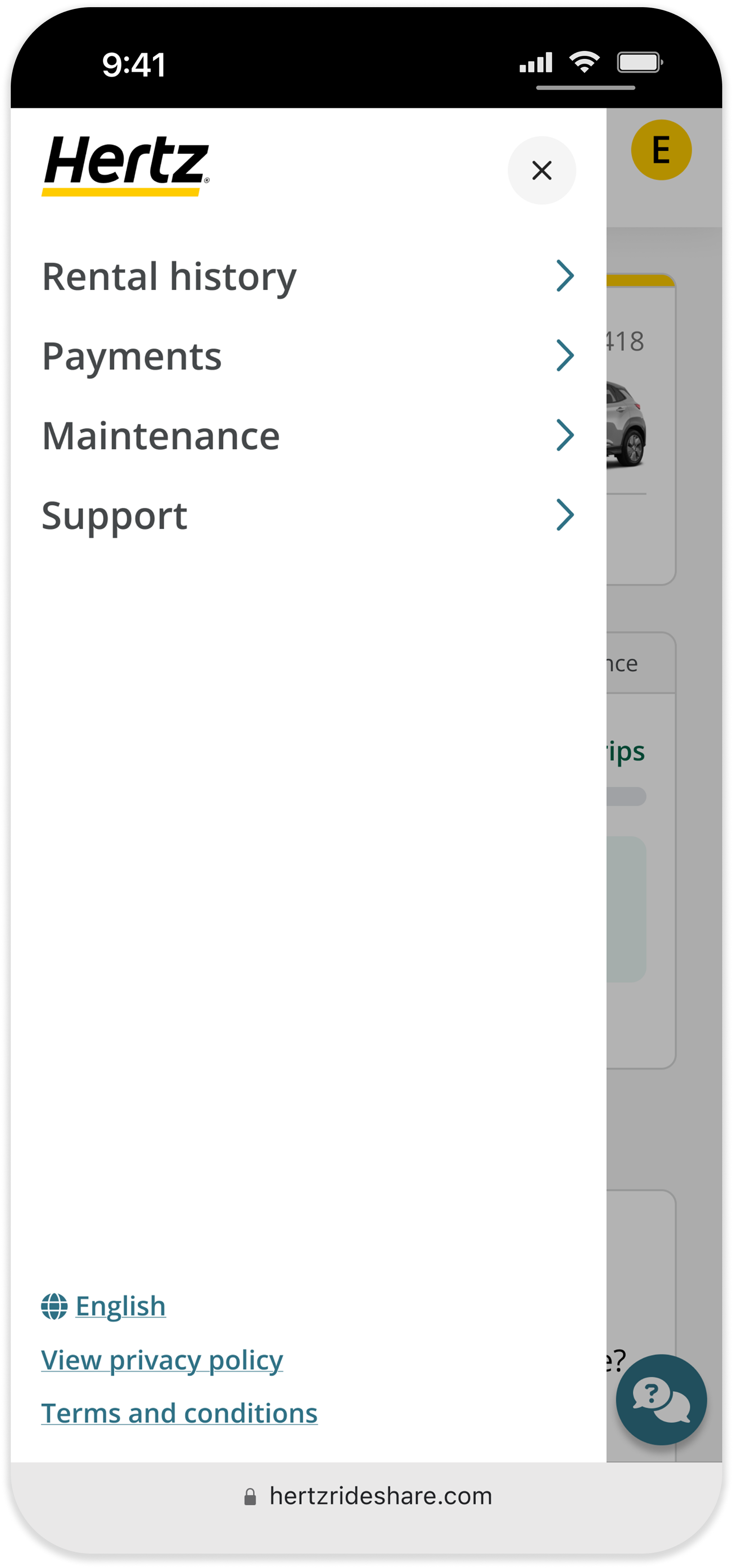
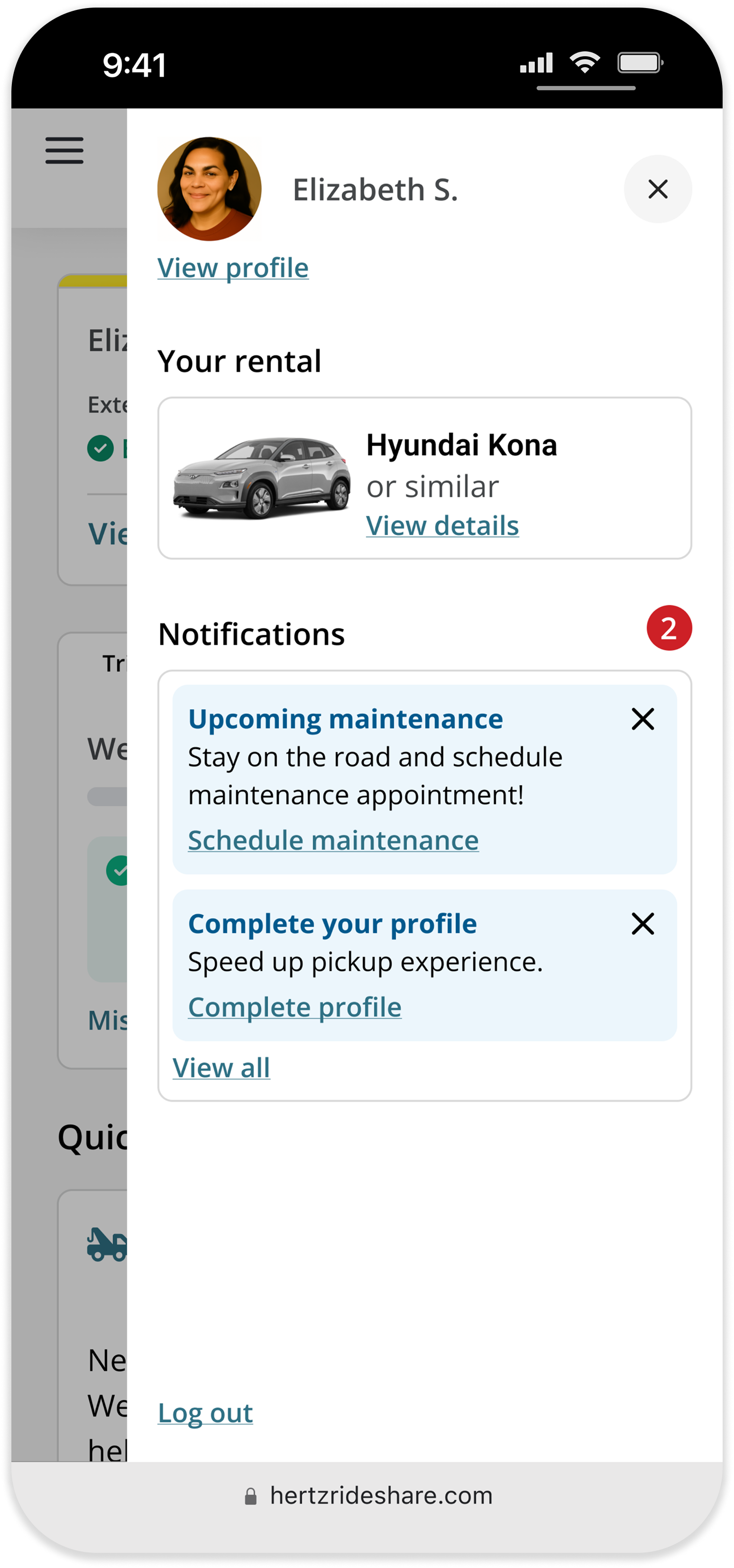
An initial MVP wireframe focused on:
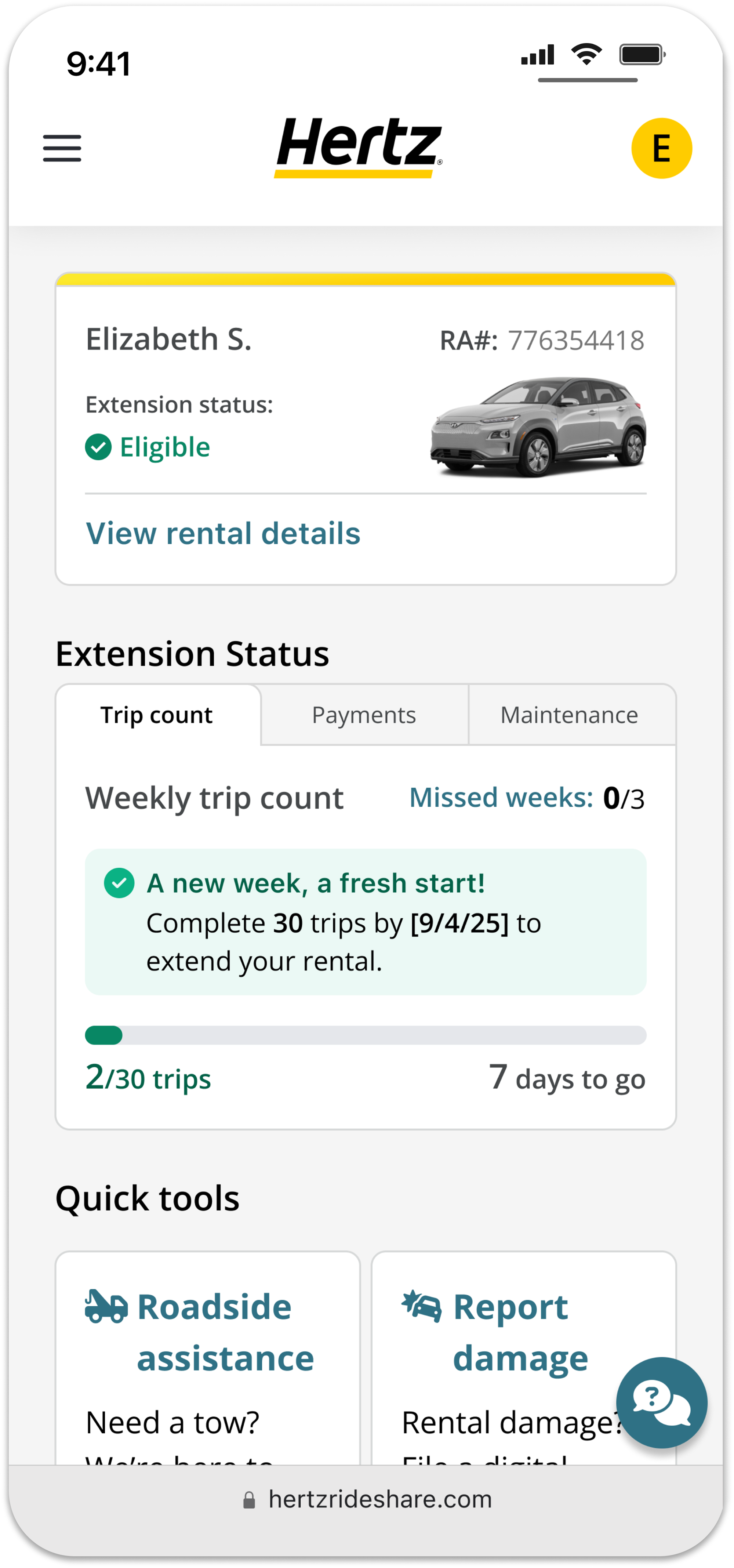
Centralizing eligibility status
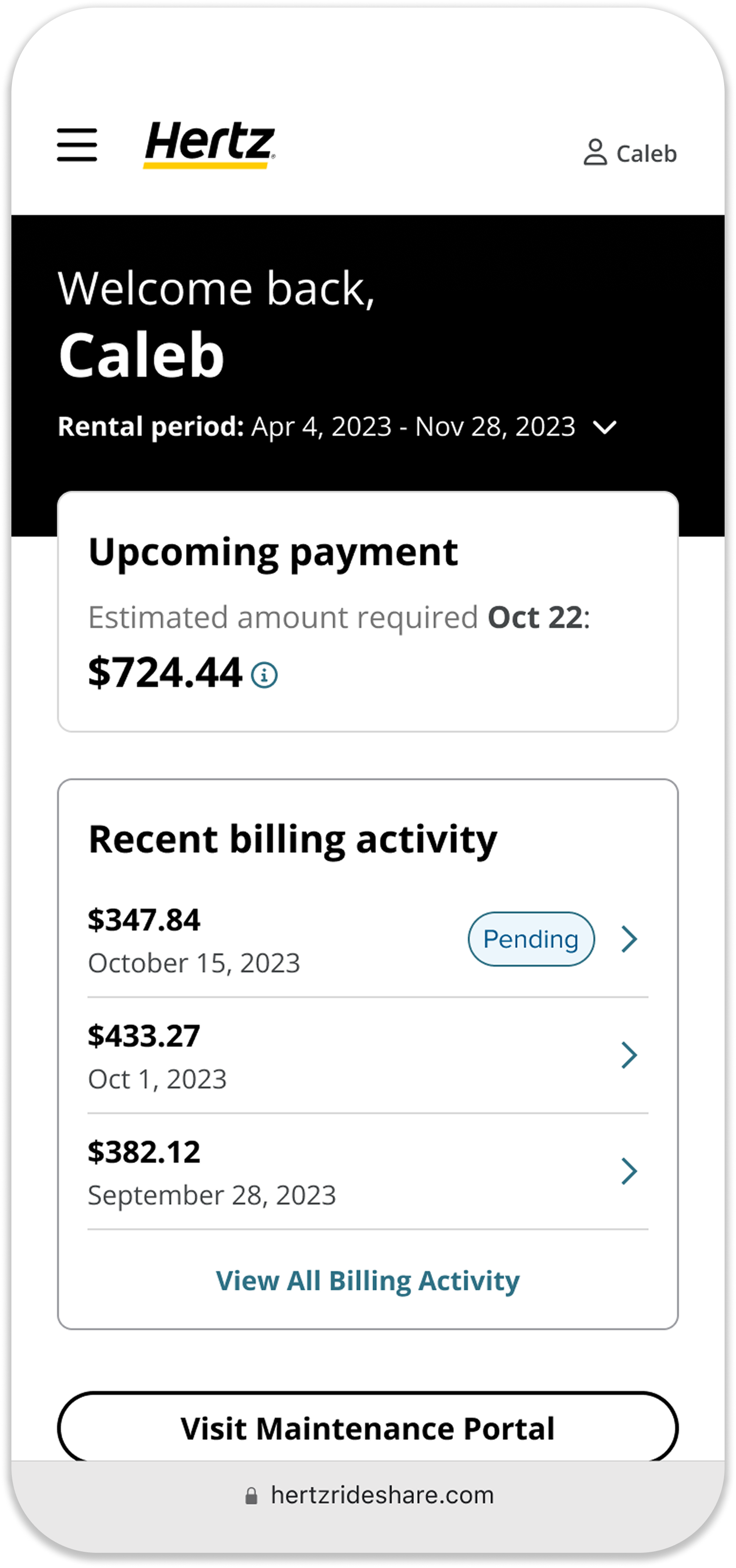
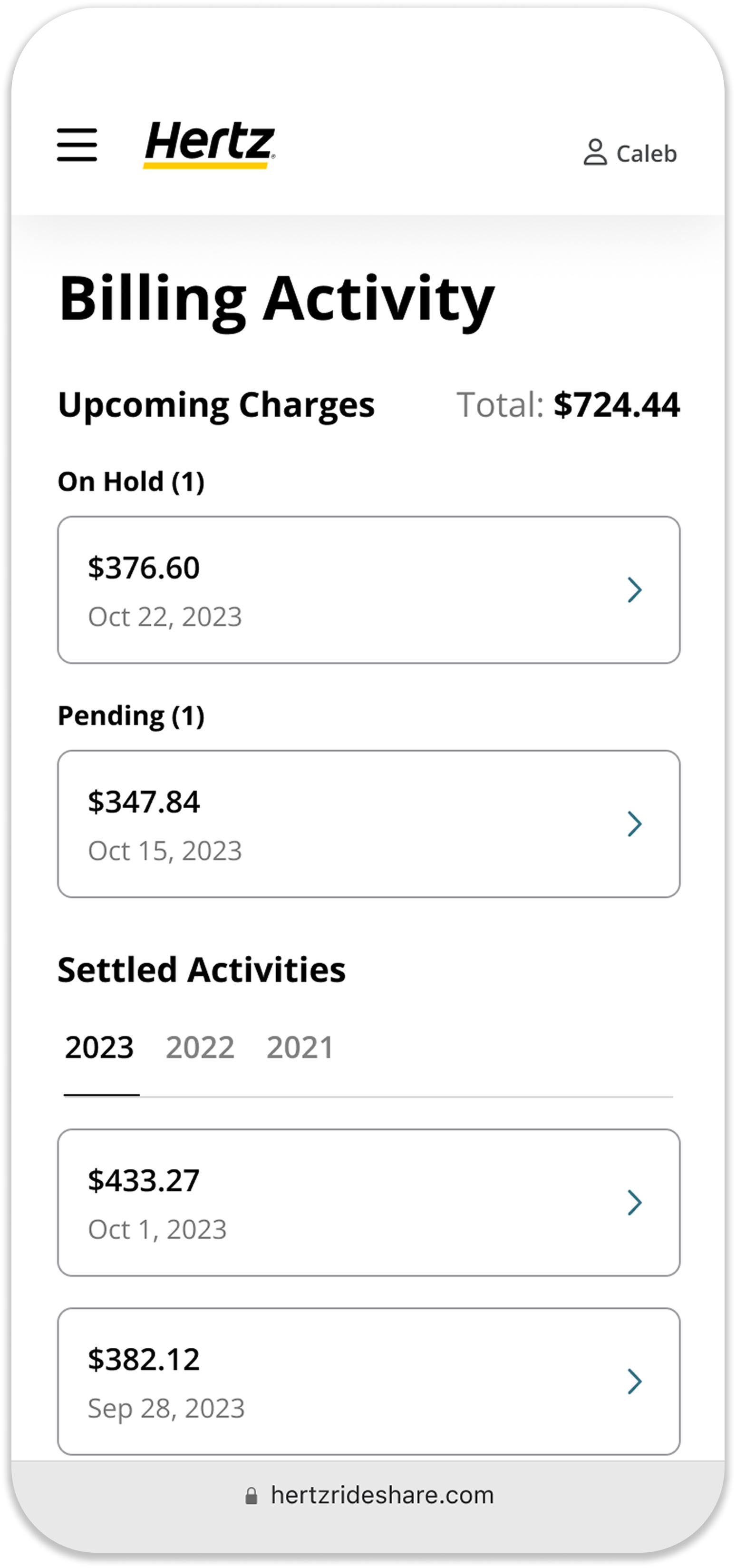
Surfacing payment history and upcoming charges
Making consequences explicit before violations occurred
Multiple iterations followed, including collaboration with PMs specializing in payment systems, which introduced constraints related to data accuracy and compliance.
The initiative was paused and restarted several times due to shifting priorities and legal considerations. During one pause, the same communication principles were tested through email and SMS campaigns.
Early MVP
Payments UX
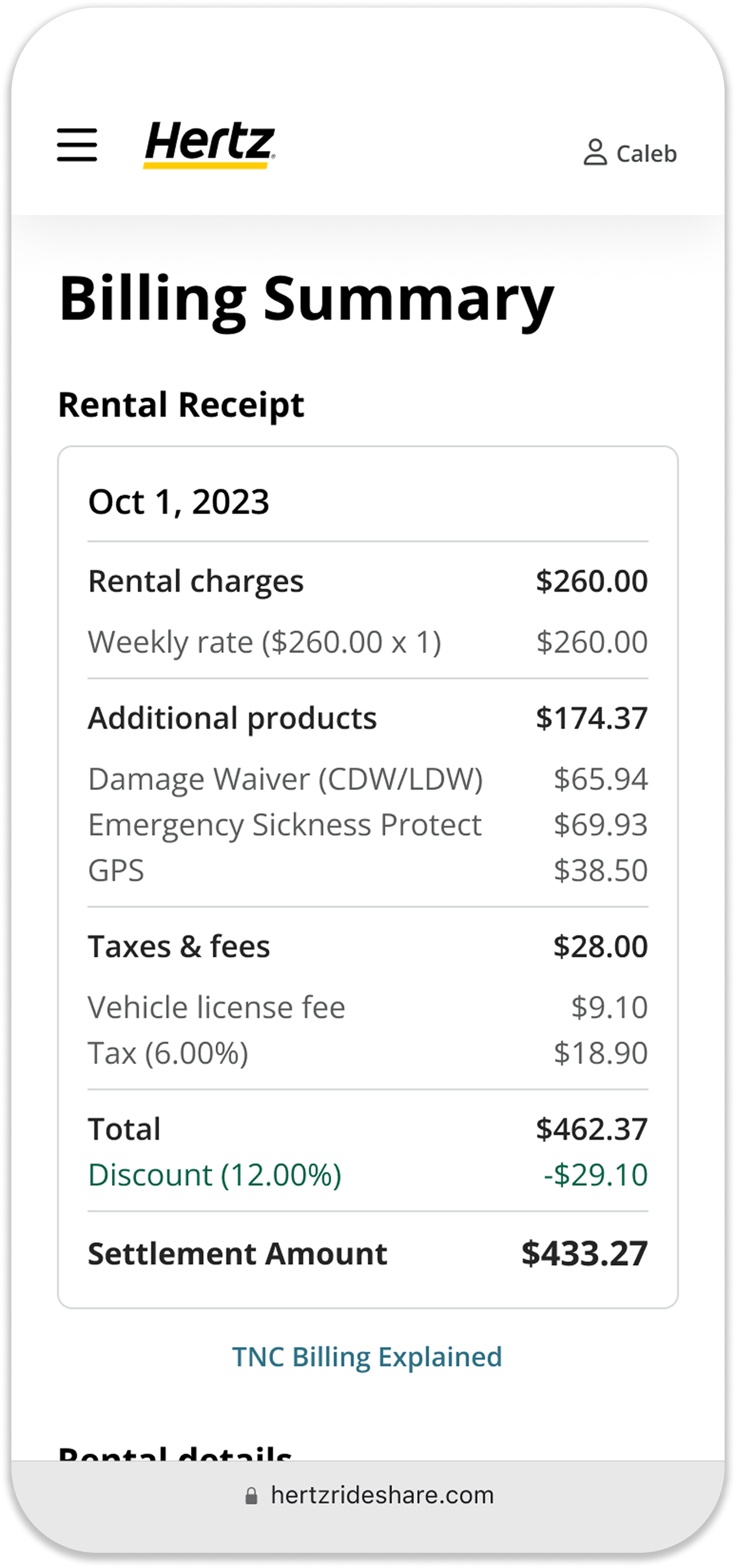
Payments received the deepest design focus due to their frequency, emotional impact and being the largest pain point for drivers.
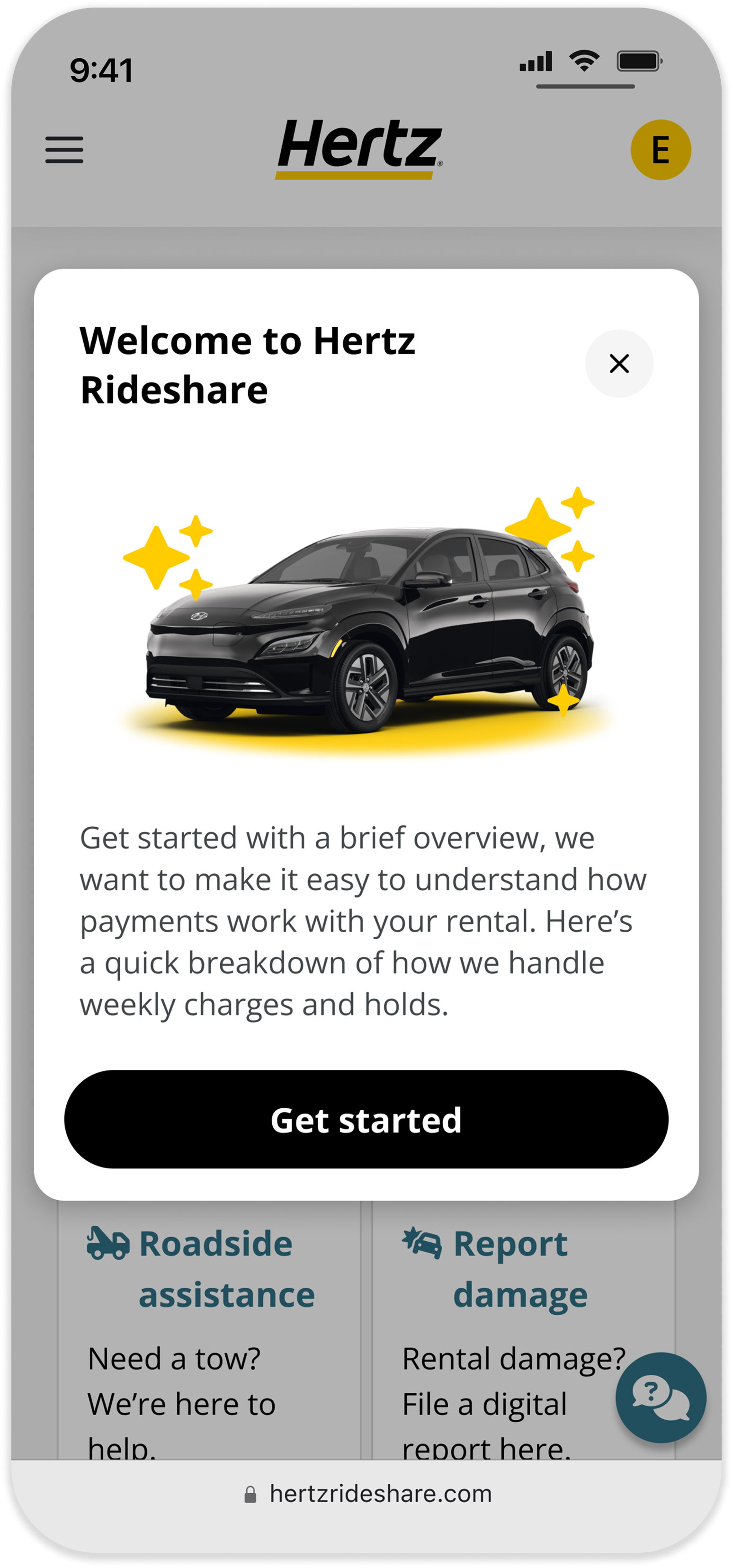
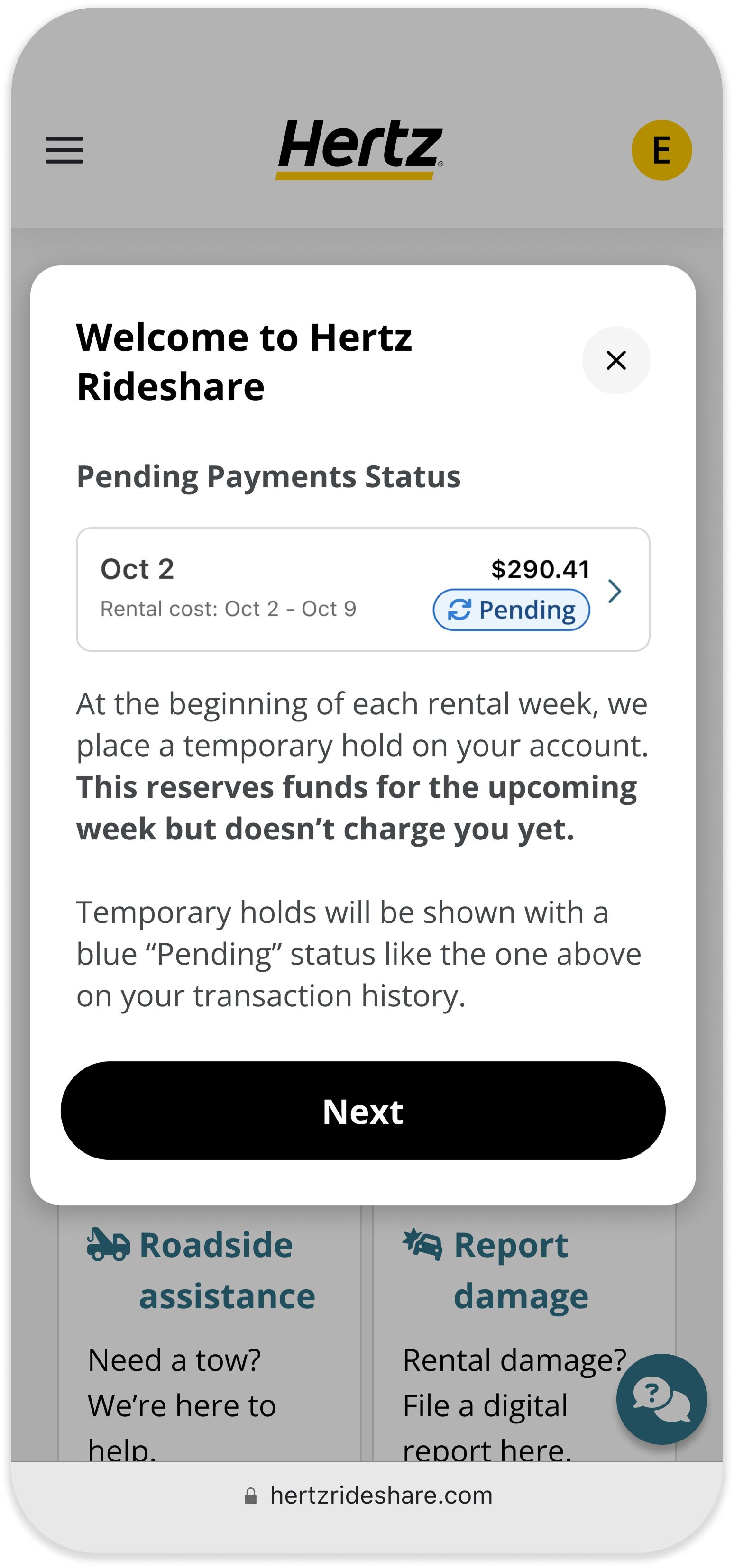
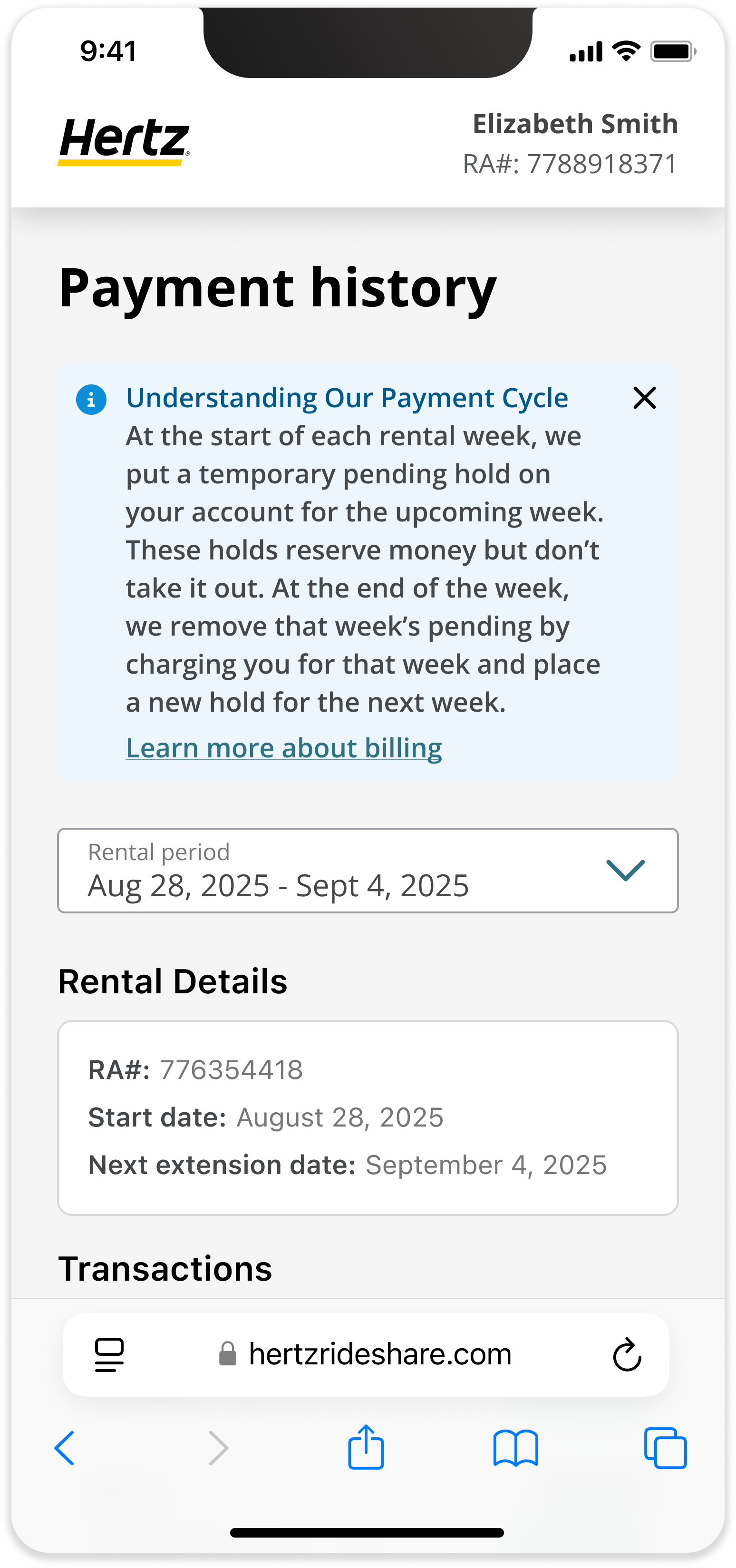
Education and expectation-setting
An onboarding walkthrough was designed to explain:
The weekly billing cadence
The difference between pending and completed payments
Why overlapping charges appear
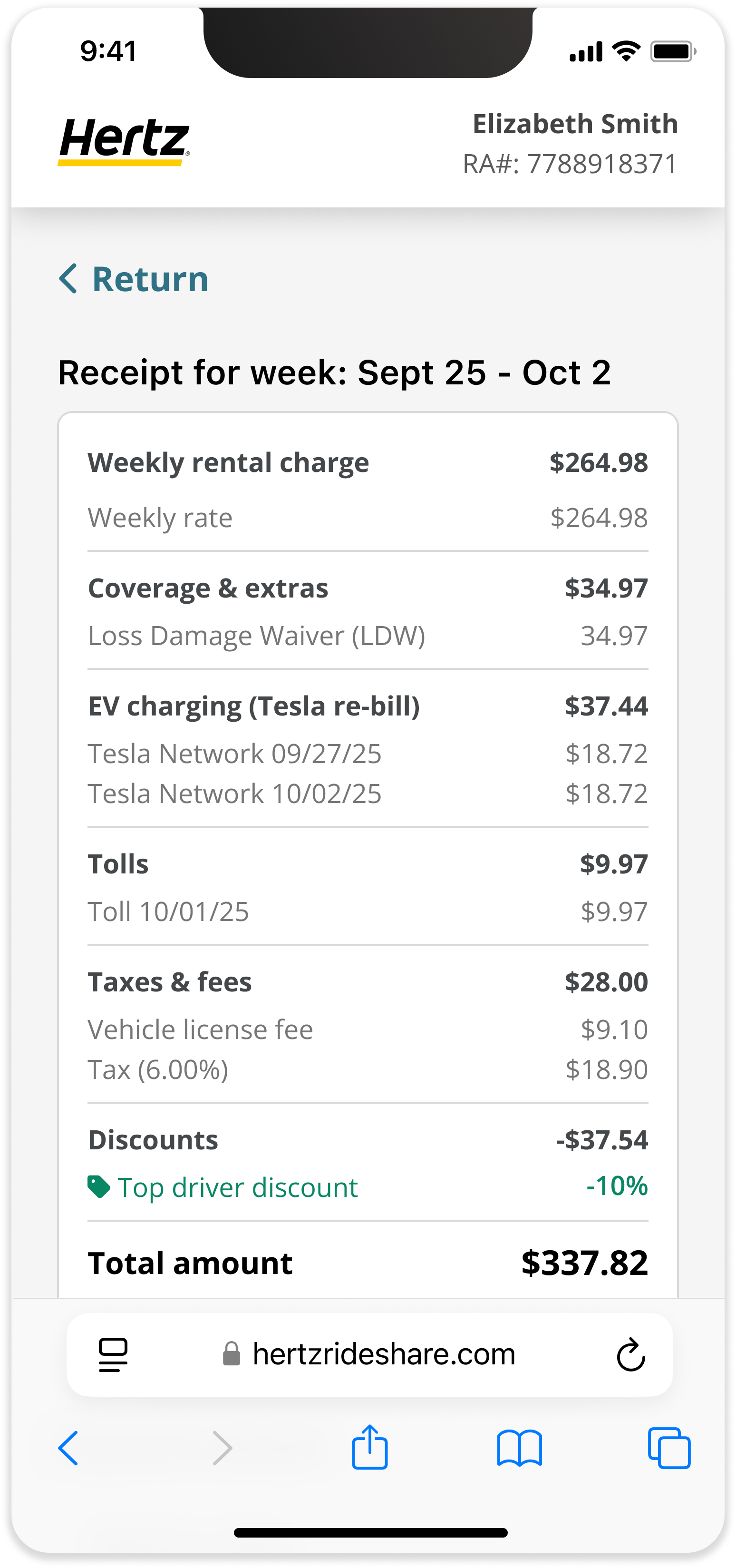
How itemized costs, including EV charging, are applied
A detailed FAQ was also linked and became one of the first supporting improvements shipped.
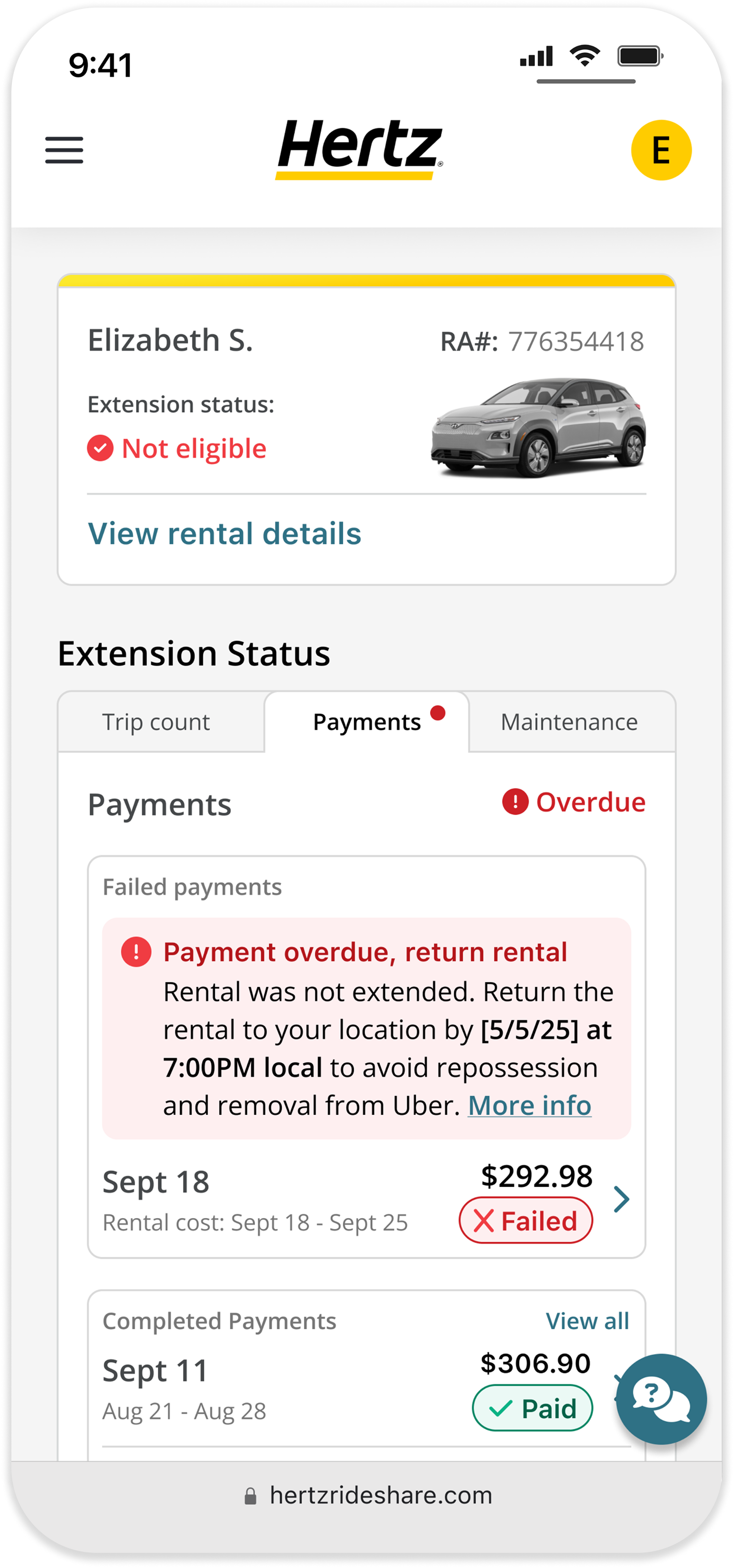
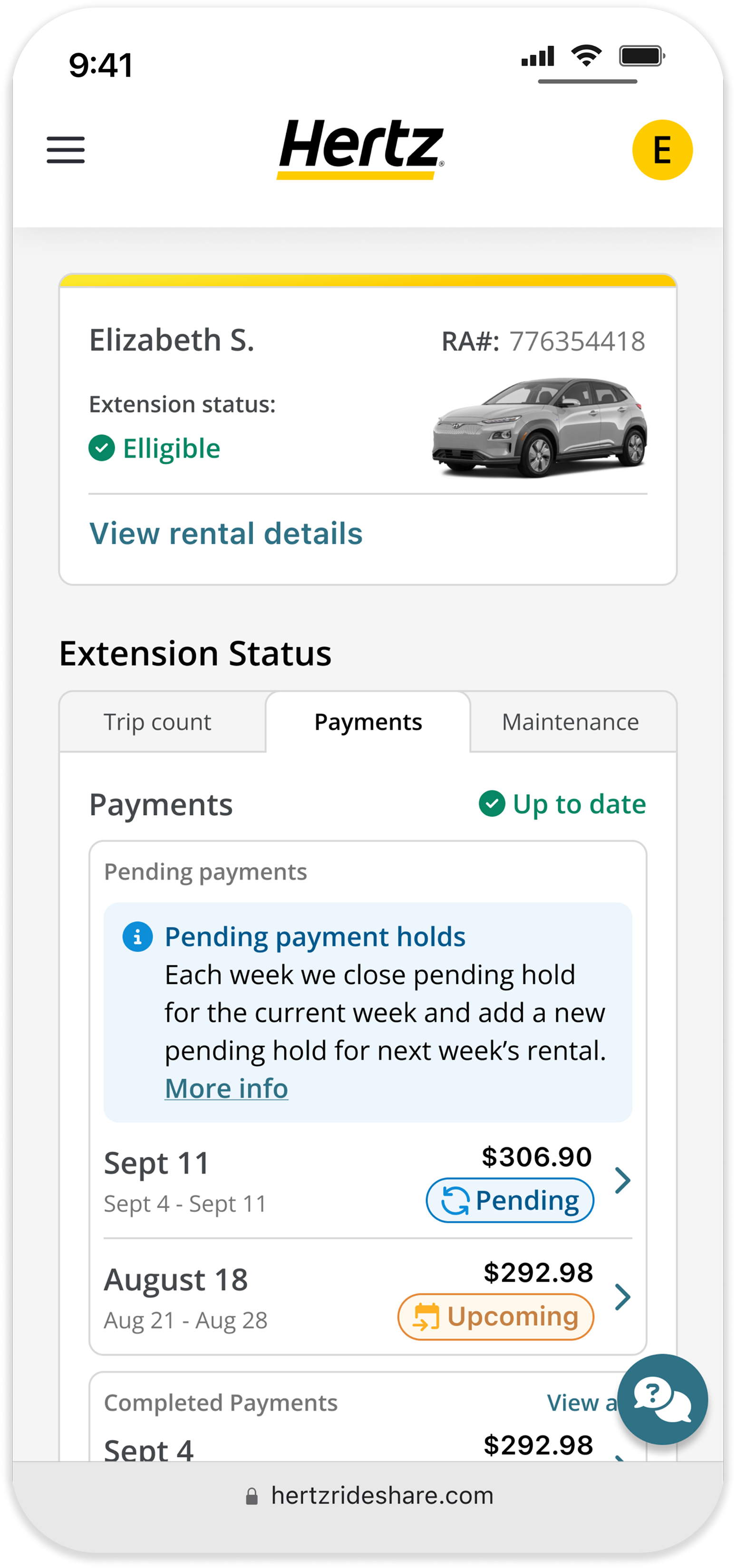
Core payment experience
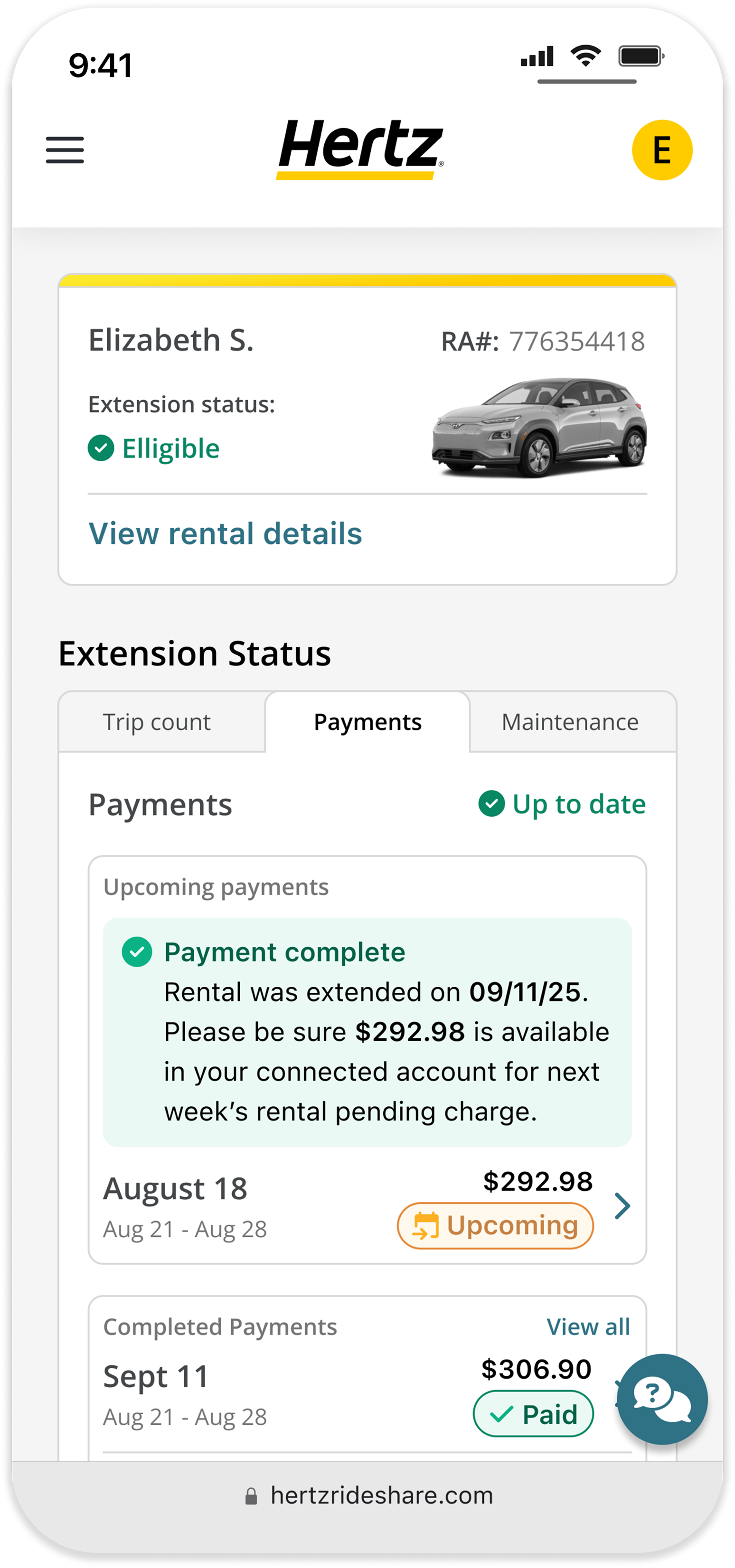
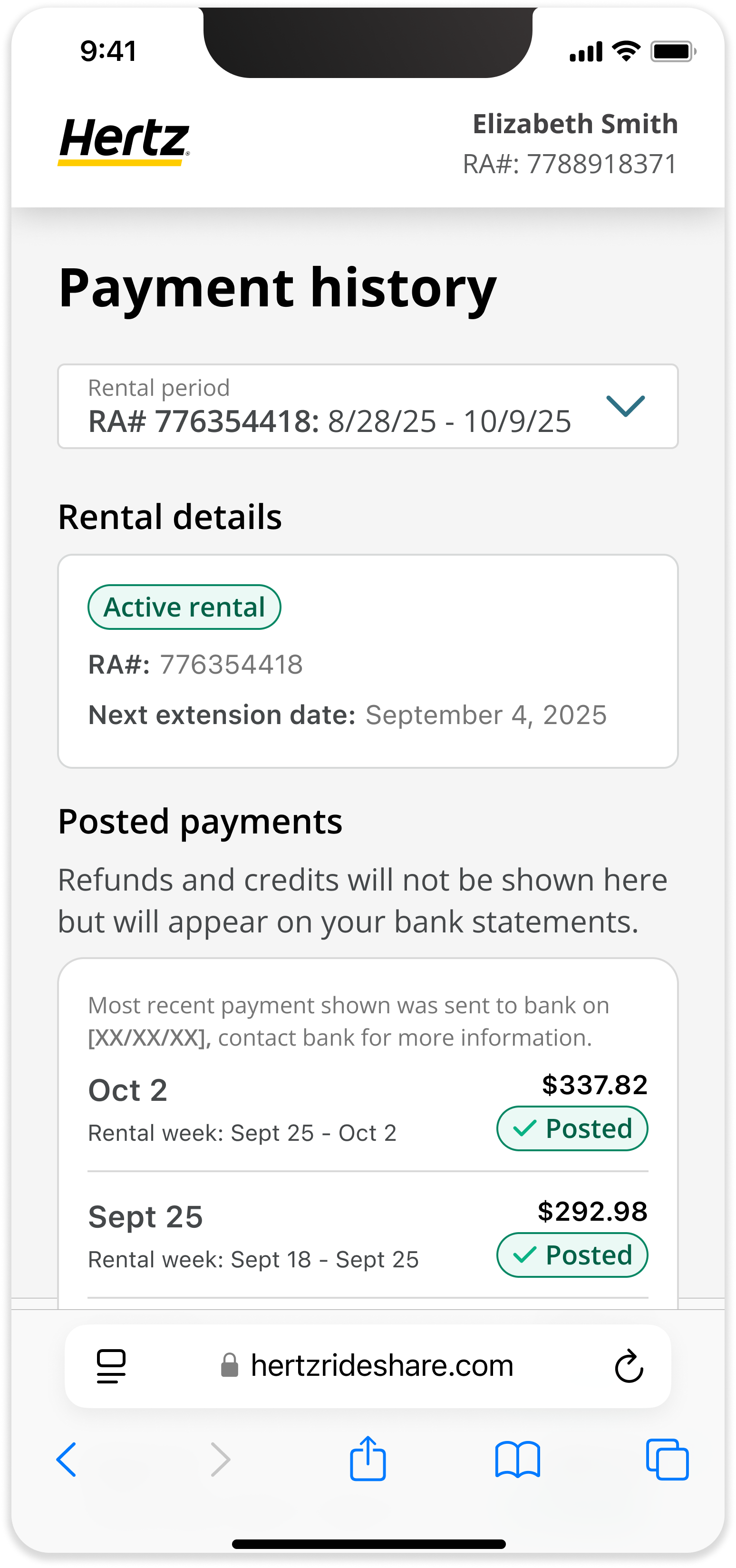
The Payments view included:
A persistent status alert reflecting the most recent update
Clear explanations when a payment was pending
A transaction list modeled after consumer banking apps, with pending charges clearly surfaced
Tap-through details for full charge breakdowns
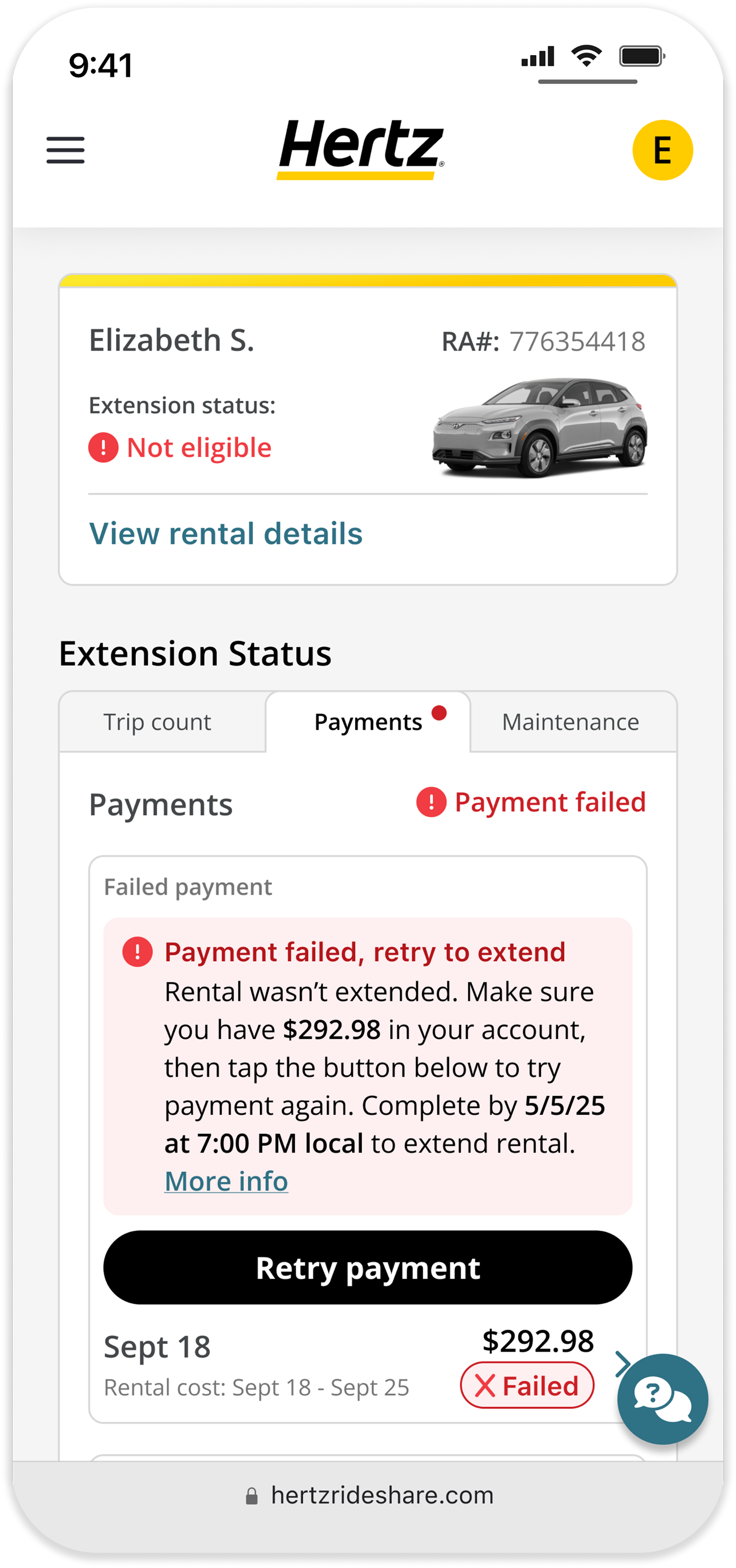
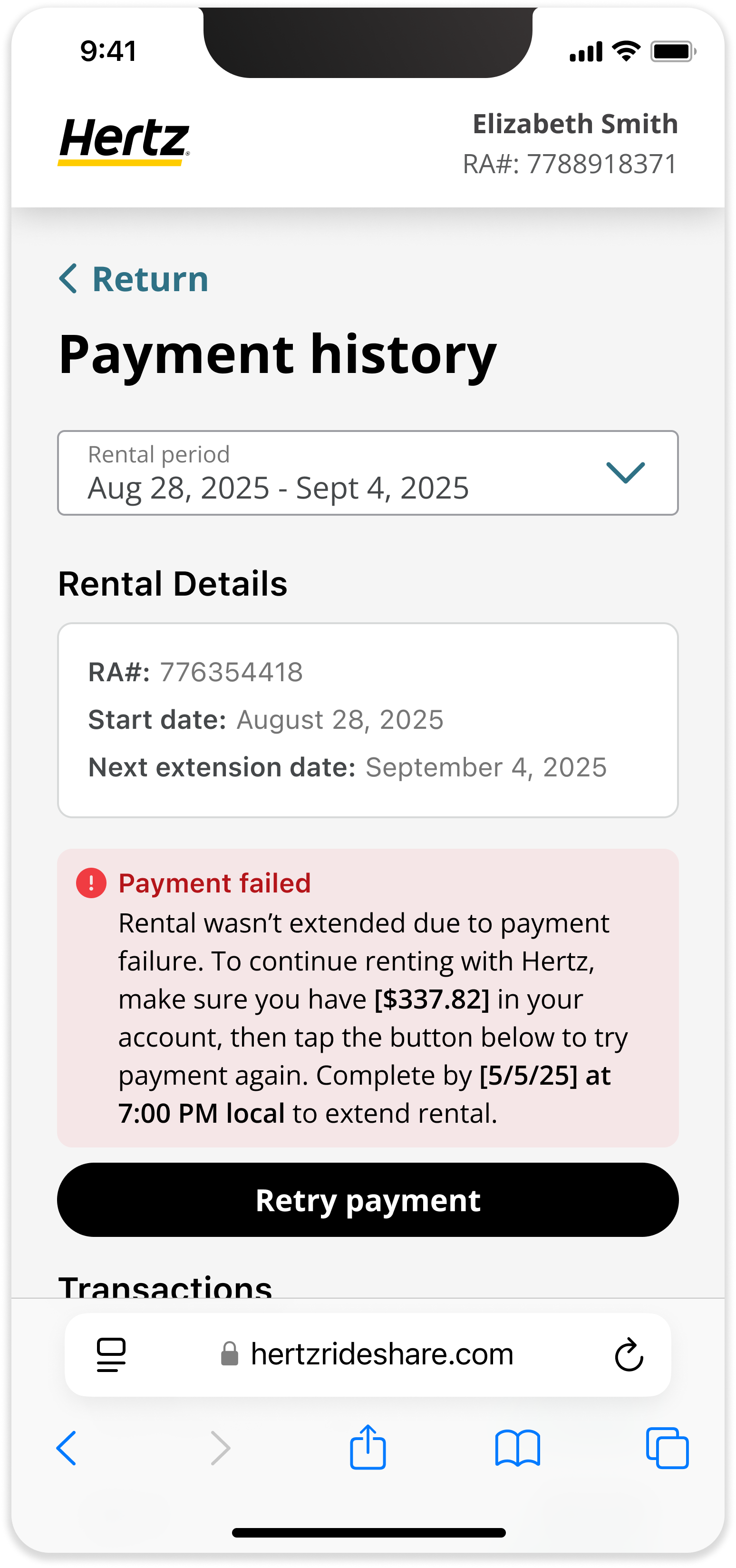
Failure states
Payment failures surfaced explicit explanations and actionable next steps, rather than generic error messages.
Extension status tabs are automatically in focus when a warning or failure status occurs.
Trip Count and Maintenance
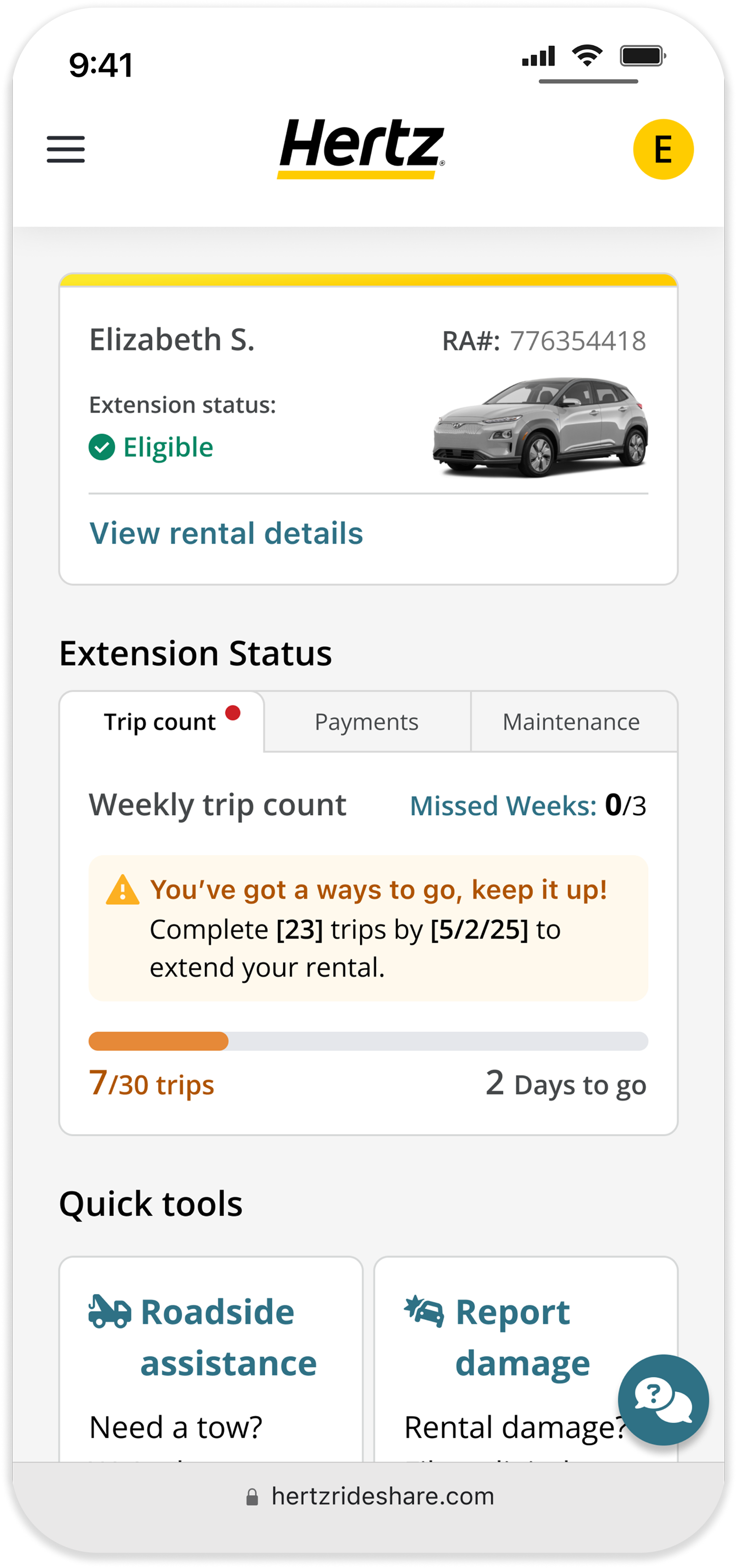
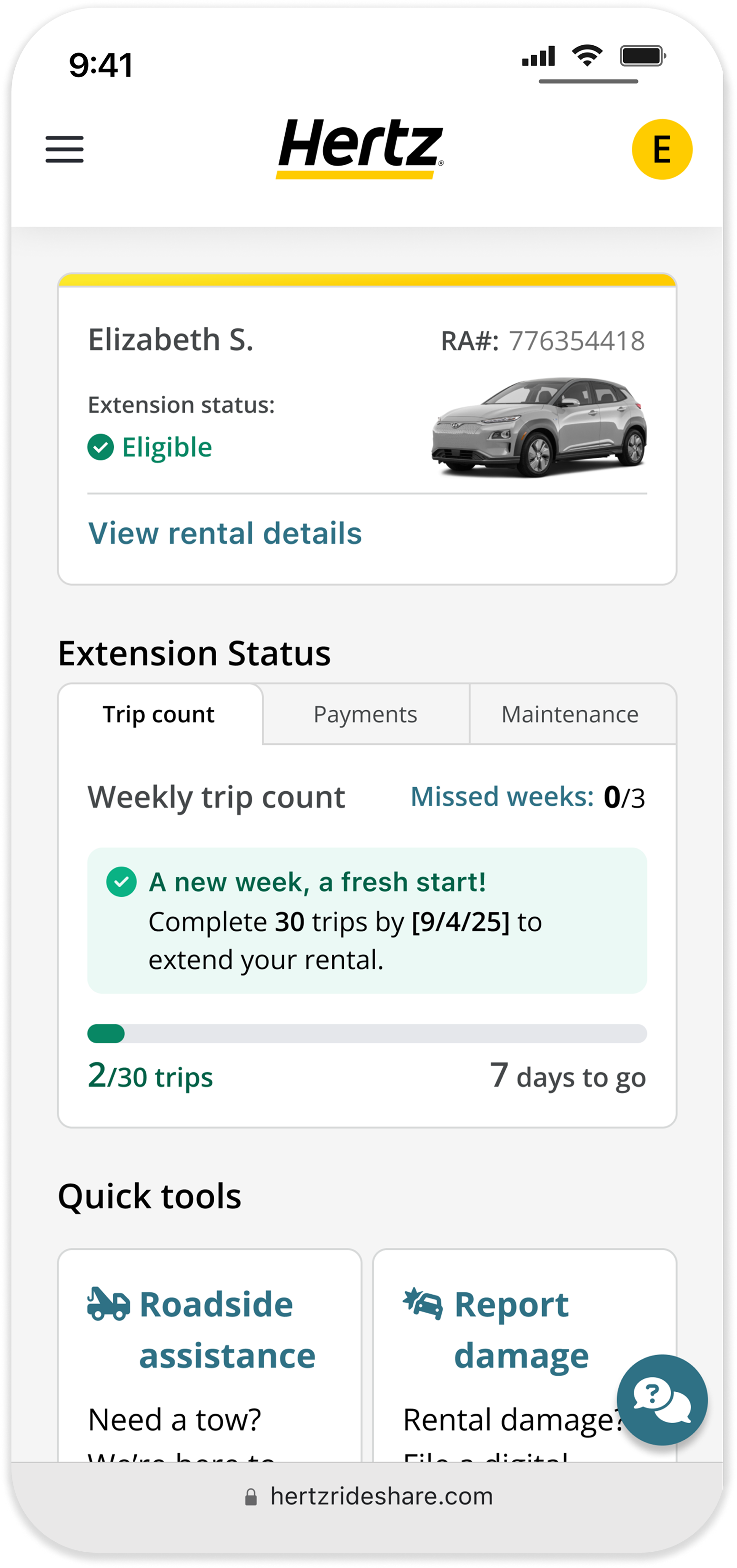
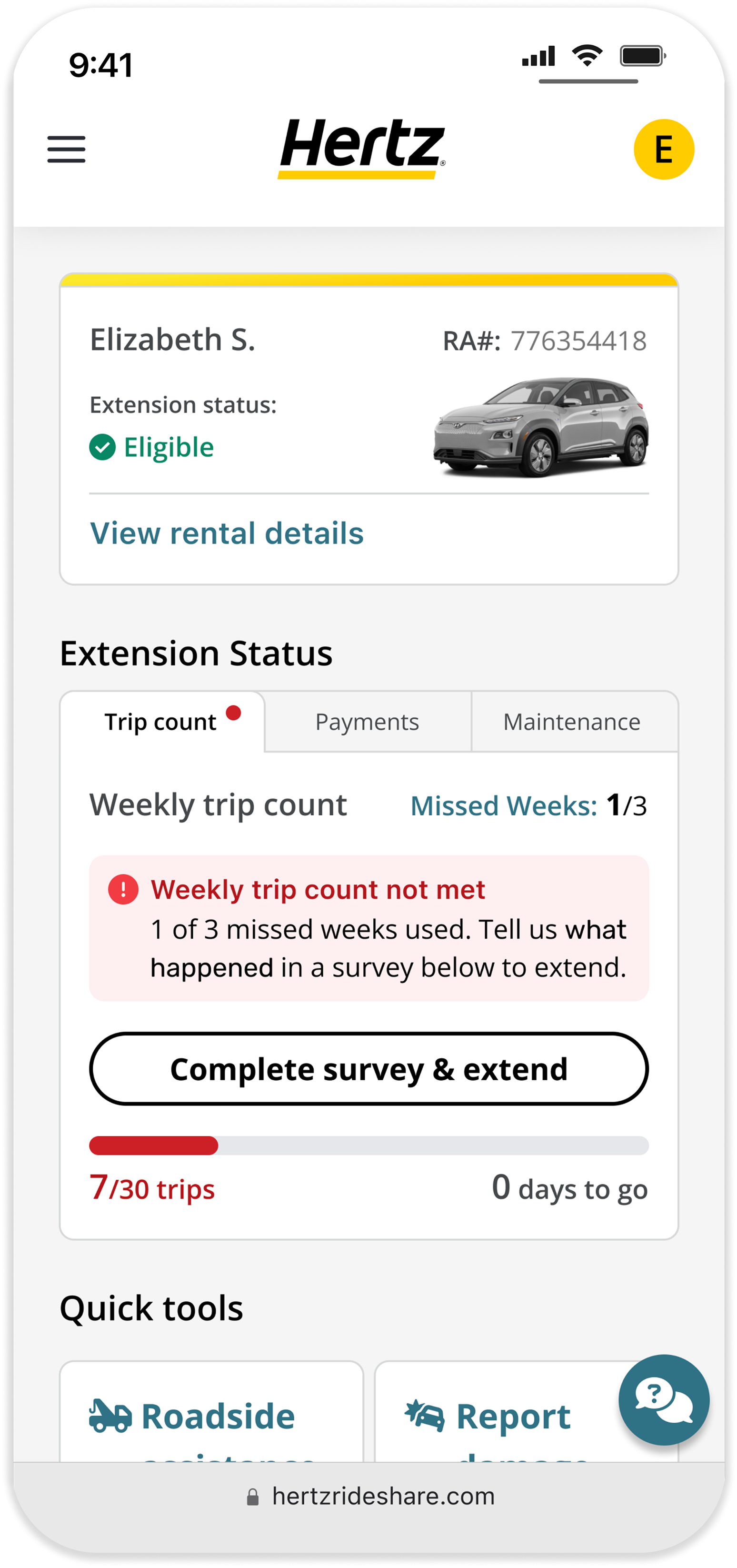
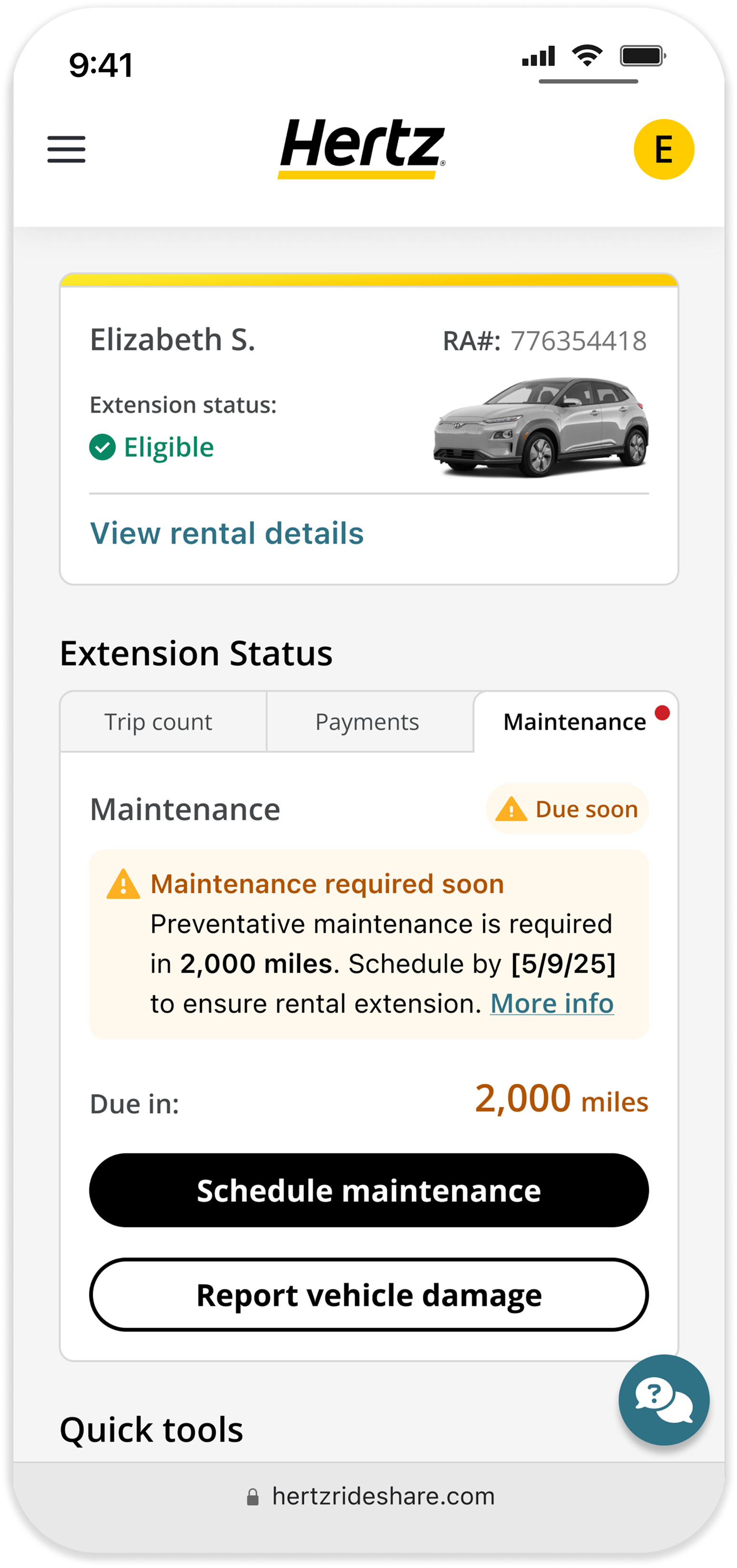
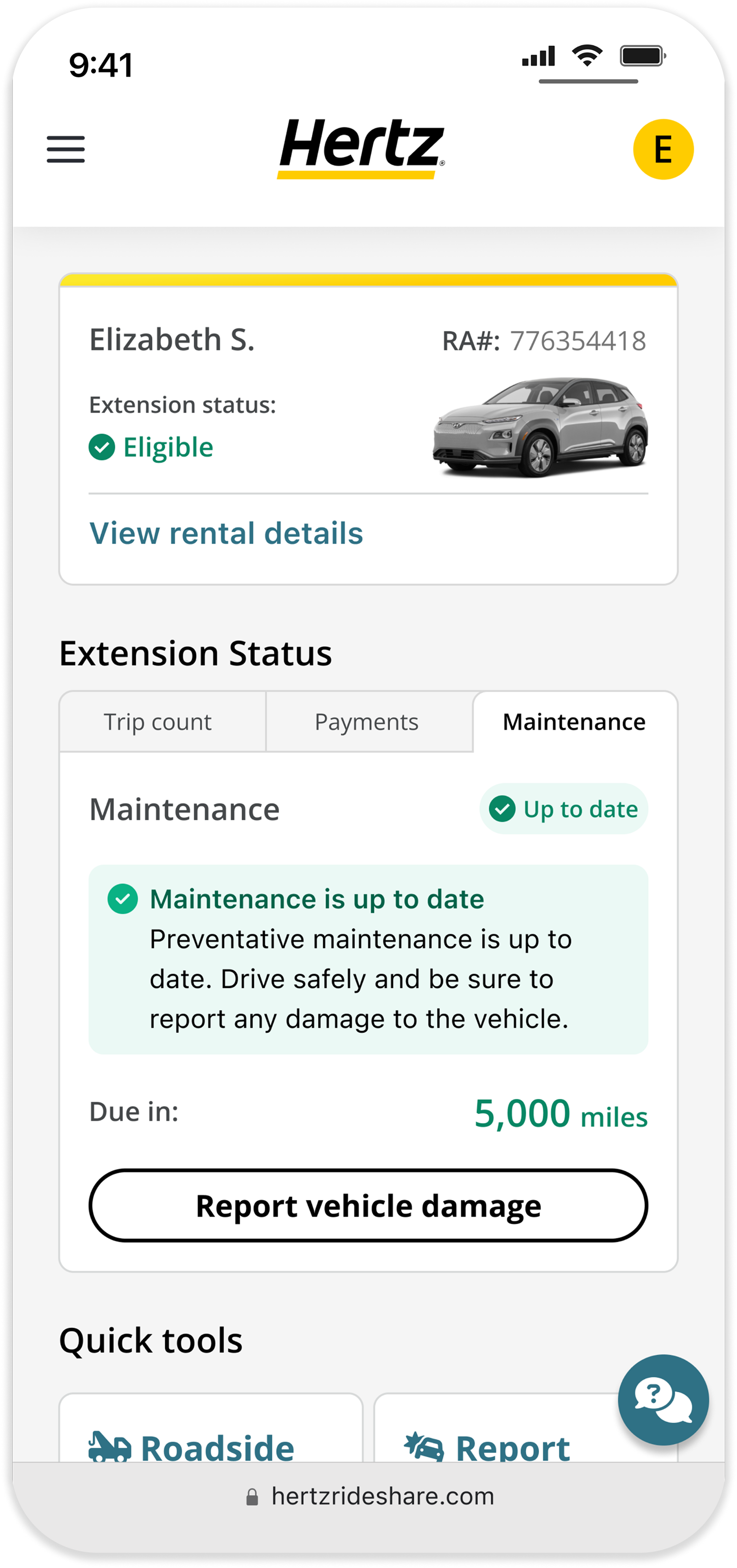
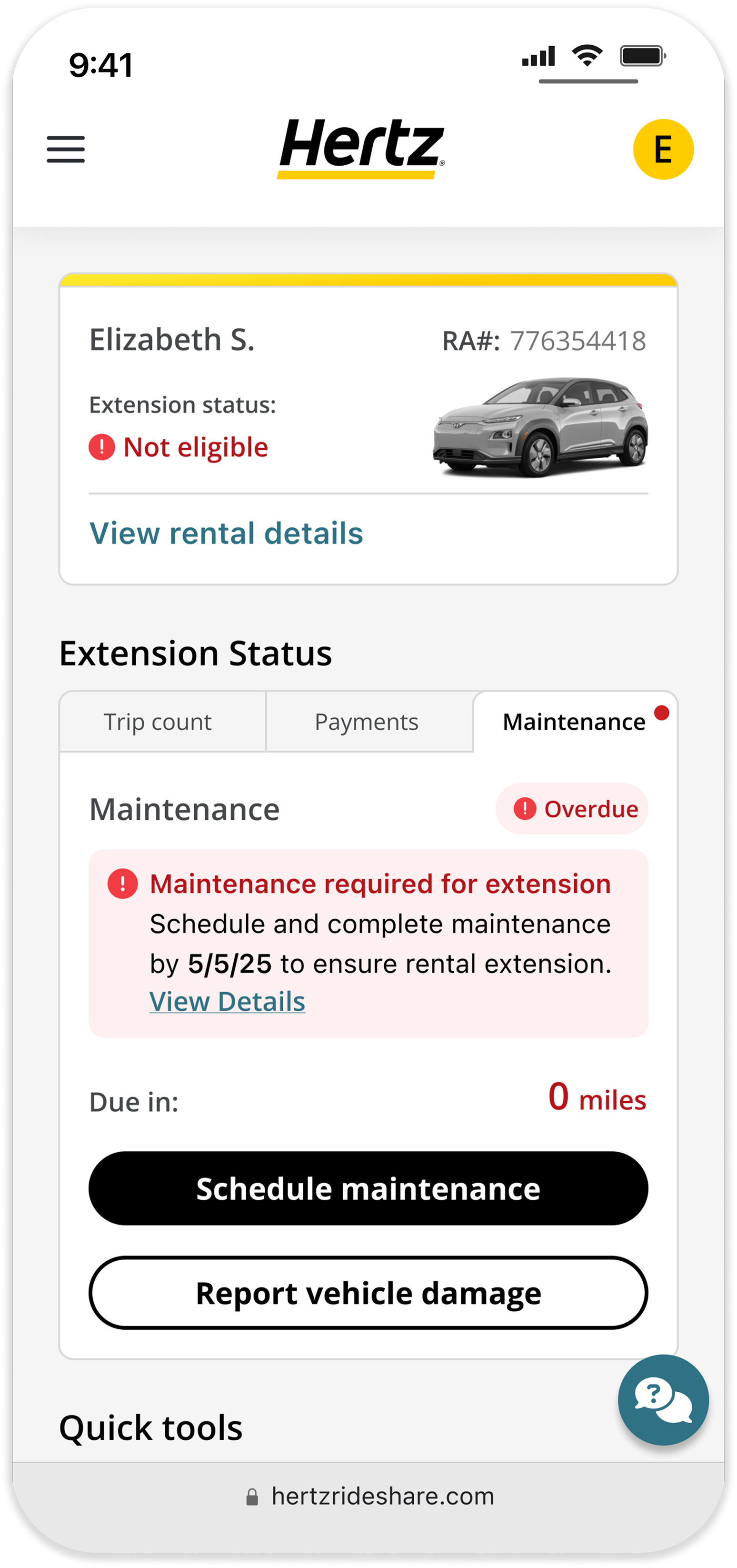
Trip count and maintenance followed the same eligibility framework while adapting urgency based on predictability.
Trip Count
Emphasized progress toward the weekly goal and increased urgency as the week progressed.
Used language to encourage drivers as the progress through the week.
Use specific language to steer towards solutions for error states and included strike system for drivers to communicate specifics when they weren’t able to meet the mark.
Maintenance
Surfaced upcoming requirements early and escalated messaging as mileage thresholds approached.
Providing connections to flows for scheduling preventative maintenance and reporting incidental vehicle damage.
Initial Release
Outcome
The project was delivered incrementally and as a result the initial release focused on the core functionality that could be implemented within the available time and technical constraints. An MVP was released with priority given to improving payment visibility and helping drivers better understand the weekly billing process, with plans to expand the experience over time.
+15%
Increase in payment resolution rates from 77% to 92% by improving visibility around the billing process.
-1 day
Reduced average vehicle return times after improved communication for ineligible drivers with overdue rentals
+18%
Increase in rental extensions, indicating drivers will renew their rentals when given the awareness and tools